Painting Kitchen Cabinets or Replacing Them: What the Job Involves
If your cabinet boxes are sound, painting can change the whole kitchen without tearing it out, but it's a job with real steps and real patience.
October 7, 2026 · 4 min read
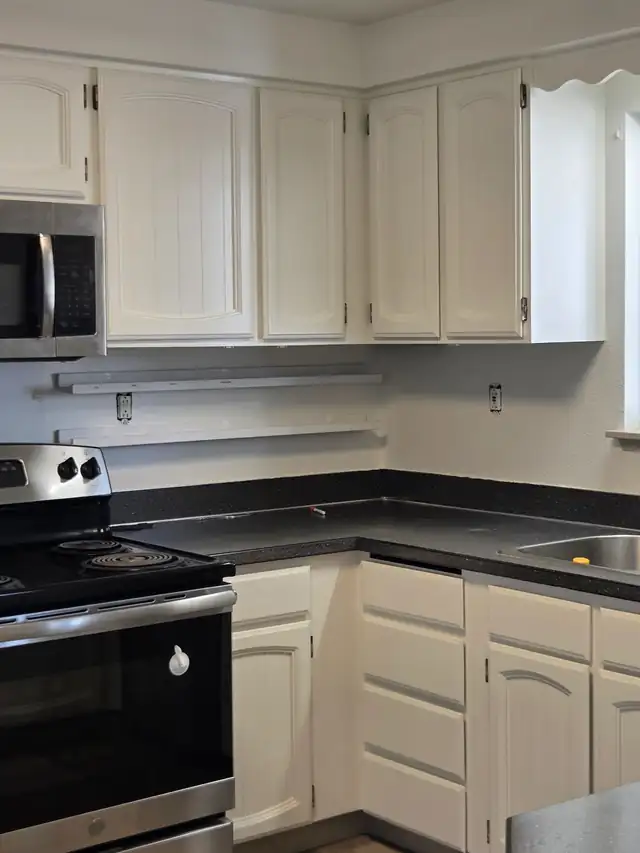
Tired kitchens come with a choice. You can tear out the cabinets and start over, or you can keep what's there and change the colour. Both are legitimate answers. The right one depends on what shape your cabinets are in, what you want the kitchen to do, and how much disruption you can live with. Here's how to think it through, and what a cabinet painting job actually looks like once it starts.
When painting makes sense
Painting is a strong option when the cabinet boxes are solid and the layout works for you. If the doors close properly, the shelves are sturdy and the drawers run, then what you're really unhappy about is the finish: the dated colour, the worn edges, the grime that no longer scrubs off. Paint fixes exactly that. It also lets you keep a layout you already like and a cabinet structure that was built to last.
One customer had PNW Paint paint their kitchen cabinets when they updated, and wrote that it was "very professional, reasonably priced and great to work with." That's the kind of project where the bones were good and the finish was the problem.
When replacement is the better call
Paint can't change what's wrong with the cabinets themselves. Consider replacing them if any of these are true:
- The boxes are water damaged, swollen or crumbling, especially under the sink.
- Doors or frames are warped or cracked in ways that sanding and filling won't fix.
- You want a different layout, with moved appliances, new sizes or more storage.
- The cabinets are built from a material or in a condition that won't hold a painted finish well.
- You're planning a full kitchen remodel anyway and the cabinets are part of it.
If you're on the fence, ask a painter to look at the cabinets in person before you decide. A quick inspection tells you whether the surfaces are sound enough to paint. Get quotes for both routes so you're comparing real numbers from real contractors, not guesses.
What a cabinet painting job involves
A cabinet repaint is far more work than painting a wall, because cabinets get handled constantly and the finish has to take it. The steps are what make the difference between a finish that holds and one that chips in the first few months.
- Protect the kitchen. Floors, counters and appliances get covered so dust and overspray don't land on them.
- Take off the doors and hardware where it makes sense, so every surface can be painted properly.
- Clean and degrease everything. Kitchen cabinets carry cooking residue that stops paint from bonding.
- Repair and fill dents, old hardware holes and damaged spots, then sand them smooth.
- Sand or scuff the existing finish so the new coat has something to grip.
- Prime, especially on bare or repaired areas, and on any surface the old finish might bleed through.
- Apply the finish coats with care, letting each one dry properly before the next goes on.
- Reinstall the doors and hardware once the finish is ready to handle.
Notice how much of that happens before any colour goes on. That's normal. Cabinets are the surface in your home that gets the most touching, so the surface prep decides whether the finish looks good in a year.
What to expect while it's happening
Expect some disruption. Doors will be off, your kitchen won't be fully usable for part of the job, and there will be a gap while the finish dries between coats. Plan ahead for meals, and clear what's in your cabinets so the crew can work. Ask your painter for a rough schedule, and ask which days the kitchen will be hardest to use.
Ventilation matters too. Fresh coatings have a smell while they dry, so open windows when the weather allows and keep pets and kids out of the work area. Ask your painter what to expect for your specific job.
Looking after the finish afterward
A painted finish can feel dry to the touch well before it's fully hardened. Ask your painter how long to go gently with the new surface, and follow their advice. In the early period, avoid slamming doors, stacking things against fresh paint, or scrubbing with harsh cleaners. After that, a soft cloth and mild cleaner handle everyday splashes.
Be realistic about wear. Painted cabinets can show small nicks at the edges and around handles after heavy use, the same way any painted surface does. A good painter can touch these up. That upkeep is a fair trade for avoiding a full tear-out.
How to choose a painter for cabinets
Ask what the prep involves, whether doors come off, and how many coats go on. Look at photos of finished cabinet work. A painter who talks easily about degreasing, sanding and priming has done this before. One who talks only about colour hasn't thought about how it'll hold up.
Thinking about cabinets? See our cabinet painting page at /services/cabinet-painting, or call PNW Paint Company at 509-494-3608. We're licensed, bonded and insured, WA contractor licence #PNWPAPC773BP, and we paint kitchens across Yakima and the Valley.
PNW Paint Company, 509-494-3608
Call 509-494-3608More articles
Why Exterior Paint Fails Early in the Yakima Valley (and What Prep Does About It)
The weather gets blamed for most peeling paint, but the real cause is usually what happened before the first coat went on.
Painting a Rental Between Tenants: A Landlord's Turnover Checklist
A smooth rental turnover comes down to doing the repairs, priming and painting in the right order and booking the painter before the tenant leaves.