Why Exterior Paint Fails Early in the Yakima Valley (and What Prep Does About It)
The weather gets blamed for most peeling paint, but the real cause is usually what happened before the first coat went on.
October 7, 2026 · 4 min read
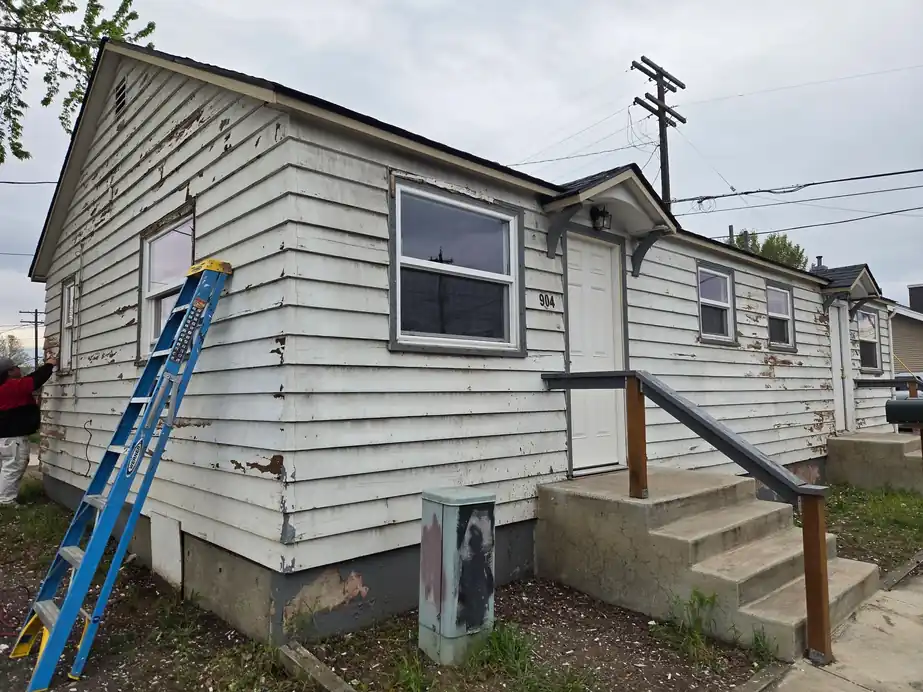
Drive through Yakima, Selah or Moxee in late summer and you'll spot it: a house with siding that's chalky on the sunny side, curling at the edges, or flaking down to bare wood around the windows. The owner usually didn't do anything wrong. Exterior paint works harder here than it does in a lot of places, and when the job underneath it was rushed, the weather finds the weak spot fast.
What the Valley does to a paint film
Think of paint as a thin skin that has to stay flexible and stay stuck at the same time. The Yakima Valley tests both. The summer sun is intense, and it beats on the same walls day after day, which breaks down the surface of the coating and fades the colour. Wind carries grit and dust that scours the finish and works at any edge that has already started to lift.
Then there's the swing between hot and cold. Heat swells wood and siding during the day, and cold shrinks it back at night. That constant expanding and shrinking pulls at the paint. If the coating isn't bonded well to a sound surface, it lets go. Add changing seasons, spring rain and winter snow, and moisture finds the smallest gap: a hairline crack at a trim joint, a nail head with no coating on it, a seam that was never sealed.
Once water gets behind the paint, it swells the wood and pushes the film off from underneath. That's why peeling so often starts low on a wall, around windows and doors, and along horizontal trim where water sits. The paint on top might be perfectly good. It just has nothing solid holding it down.
Where early failure really starts
It's tempting to blame the paint itself. The cause is nearly always what happened, or didn't happen, before the first coat went on. These are the usual suspects when a repaint fails early:
- Paint applied over dirt, dust or chalky residue, so the new coat bonds to the grime instead of the wall.
- Old loose paint left in place, which takes the fresh paint with it when it lifts.
- Gaps and cracks left open at trim, corners and windows, so water gets in behind the finish.
- Bare wood painted without a primer, so the topcoat soaks in unevenly and never forms a proper film.
- A hard, glossy old surface painted without sanding, leaving nothing for the new coat to grip.
Every one of those problems is invisible the day the crew packs up. A wall that was prepped badly and a wall that was prepped well look almost the same on day one. The difference shows up after a hot summer and a cold winter have both had their turn.
What proper prep does about it
Preparation is the unglamorous part of the job, and it's the part that decides how long the paint lasts. Done properly, exterior prep follows a sensible order, and each step answers one of the failures above.
- Clean the surface so dust, cobwebs and chalky residue are gone and the new paint has something real to stick to.
- Scrape away every bit of loose or peeling paint, back to a firm edge that isn't going to lift.
- Sand the scraped edges so they blend smoothly, and scuff glossy areas so the topcoat can grip.
- Caulk the gaps at trim, corners and joints so water has no easy way in.
- Make minor repairs to damaged boards or trim that would otherwise hold moisture against the wall.
- Prime bare wood and any exposed or problem areas so the topcoat sits evenly and bonds.
None of that is exciting to watch, and all of it takes time. That's exactly why it gets skipped when a contractor is trying to hit a low number or a tight schedule. It's also why a house that looks great for one season can look tired by the next.
Why good prep pays you back
A coating that's bonded to a clean, sound, sealed surface can flex with the wood and shrug off the weather. A coating stuck to a dirty, flaky, open surface can't. You're paying for the paint either way, and prep decides whether you get the full life out of it.
Homeowners tell us the same thing when it goes well. One customer wrote that PNW Paint "did a fantastic job on the exterior of our home. Very professional, tidy, finished in a timely manner and great attention to detail." Tidy and detailed is what prep looks like from the outside: nothing left half scraped, no gaps left open, no corners cut.
Questions to ask before you hire
You don't need to be a painter to tell whether a contractor takes prep seriously. Ask how they handle loose paint, whether they caulk gaps, and what they do about bare wood. A good answer is specific. A vague answer, or one that skips straight to which colour you want, is worth a second look.
Ask to see the prep written into the quote, too. If the quote only mentions painting, you can't be sure the scraping, sanding, caulking and priming are included. It's much easier to sort that out before the work starts than after the first coat is on.
Timing matters as well. Paint behaves differently depending on the weather it goes on in, so a painter who watches the forecast and works around rain and heat is protecting your finish. When the weather doesn't cooperate, the careful move is to wait a day, not to push ahead and hope.
If your house is showing the signs, see our exterior painting page at /services/exterior-painting, then call PNW Paint Company at 509-494-3608. We're licensed, bonded and insured, WA contractor licence #PNWPAPC773BP, and we serve Yakima, Selah, Moxee, Zillah and the rest of the Valley.
PNW Paint Company, 509-494-3608
Call 509-494-3608More articles
Painting a Rental Between Tenants: A Landlord's Turnover Checklist
A smooth rental turnover comes down to doing the repairs, priming and painting in the right order and booking the painter before the tenant leaves.
Painting Kitchen Cabinets or Replacing Them: What the Job Involves
If your cabinet boxes are sound, painting can change the whole kitchen without tearing it out, but it's a job with real steps and real patience.